Art · Exhibitions · Culture
Art Galleries in Valencia: Exhibitions, Artists and Collecting
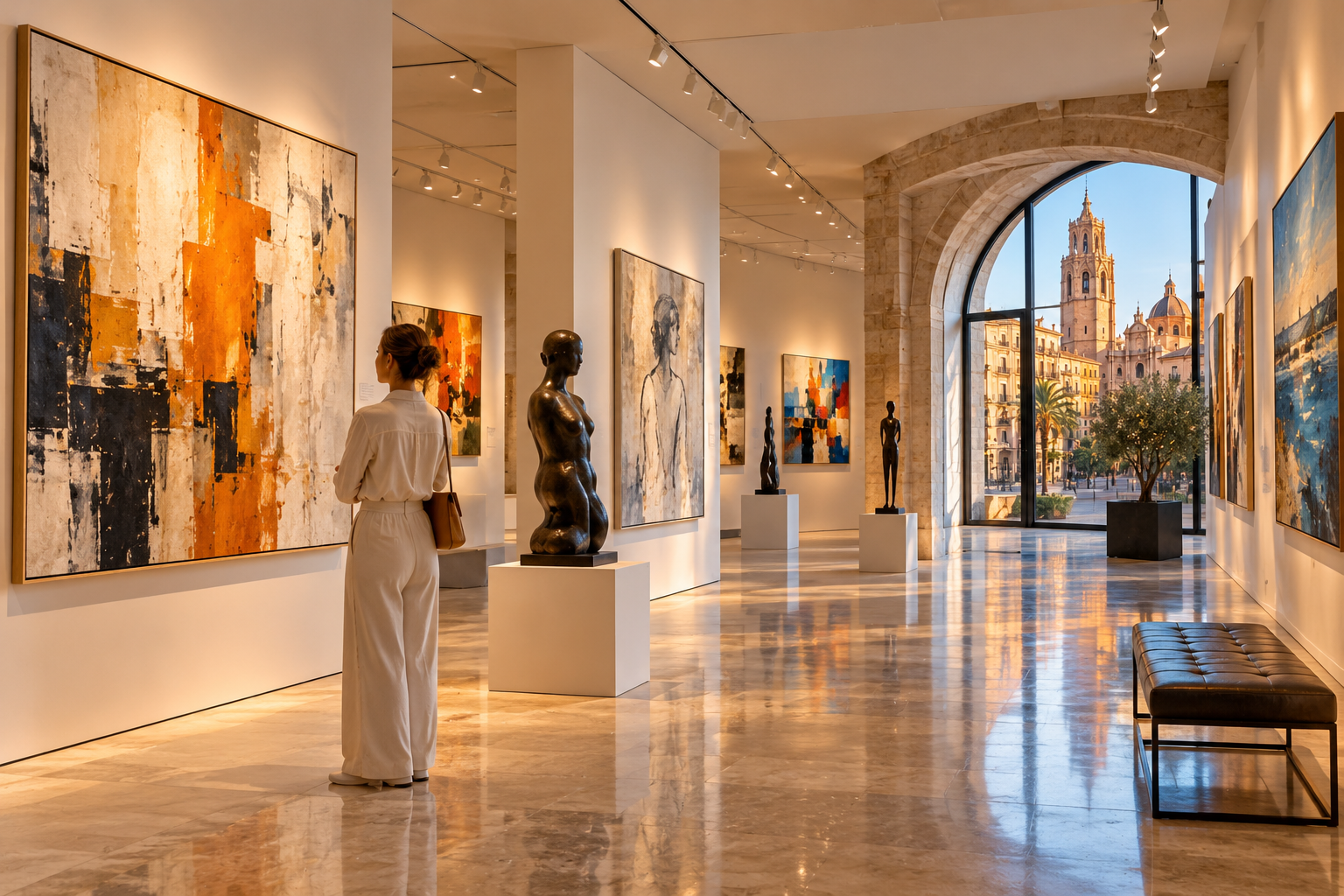
Valencia offers many ways to explore the world of art, from painting and sculpture exhibitions to contemporary works and projects by emerging artists. Discovering its galleries is an opportunity to explore new ideas, meet creative voices and find artworks that connect with your own sensibilities.
The Role of Art Galleries in Valencia
Art galleries play an important role in a city’s cultural life. They provide spaces where artists present their work, visitors discover different visual languages and professionals create connections between artistic production and the public.
In Valencia, interest in art is closely connected to a cultural tradition that encompasses painting, sculpture, ceramics, photography and other disciplines. This diversity makes it possible to discover a wide range of artistic approaches, whether you are exploring art for the first time or have been following its development for years.
Visiting a gallery involves more than simply looking at paintings. It also offers an opportunity to understand the ideas behind an exhibition, discover new perspectives and explore how artists interpret the world around them.
What Can You Find in an Art Gallery?
Collections and exhibitions vary from one gallery to another. Some spaces specialise in painting and sculpture, while others focus on photography, mixed media or more experimental forms of artistic expression.
Painting and Works on Paper
Painting remains one of the most widely recognised disciplines in the art market. Oil, acrylic, watercolour, drawing and printmaking offer different ways to explore colour, composition, texture and personal expression.
Sculpture and Three-Dimensional Art
Sculpture introduces volume, materials and space as fundamental artistic elements. Works may be created using stone, metal, wood, ceramics, resin or other materials, allowing visitors to appreciate the relationship between form and its surroundings.
Photography and New Forms of Expression
Art photography, installations and digital projects expand the possibilities of an exhibition. These disciplines allow artists to explore social issues, personal experiences and new ways of interpreting reality.
Established Artists and Emerging Talent
One of the most interesting aspects of visiting art galleries is the opportunity to discover artists with very different backgrounds. Some exhibitions feature established creators, while others give visibility to artists who are still developing their own distinctive style.
Emerging artists often experiment with materials, formats and concepts. Their work may reflect concerns related to identity, nature, technology or social change. Exploring these projects offers insight into the trends shaping today’s artistic landscape.
It is equally interesting to observe how established artists evolve over time. Recurring themes, changes in colour palettes and experiments with new techniques can reveal important aspects of their artistic development.
Beyond fame or commercial recognition, it is worth spending time with artworks that inspire curiosity, emotion or questions. Personal experience is also an essential part of how we understand art.
How to Enjoy Art Exhibitions
You do not need prior knowledge of art history to enjoy an exhibition. What matters is observing carefully, allowing space for personal interpretation and, whenever possible, learning about the context in which each artwork was created.
Before visiting a gallery, it is worth checking its programme to find out which artists are exhibiting and what kind of work is being presented. Some exhibitions bring together artworks around a shared theme, while others explore different stages in an artist’s career.
- Look at the artwork from a distance, then move closer to appreciate the details.
- Pay attention to the materials, textures, colours and composition.
- Read the exhibition notes to understand the context and the artist’s intentions.
- Compare artworks within the same exhibition and look for connections between them.
- Ask gallery staff if you would like to learn more about a particular work or artist.
Spending time with each artwork is often more rewarding than rushing through an exhibition. Careful observation helps reveal details and connections that may not be obvious at first glance.
Modern and Contemporary Art in Galleries
Modern art transformed the way artists represented the world. From the late nineteenth century and throughout the twentieth century, many artists challenged academic conventions and explored new approaches to colour, perspective, geometry and abstraction.
Contemporary art subsequently expanded the boundaries of artistic creation even further. Today, figurative painting, abstraction, photography, installations and works incorporating digital technologies can coexist within the same exhibition.
To explore this evolution in greater depth, it is useful to learn about the main movements of modern art and understand how their innovations continue to influence artists today.
This historical perspective helps visitors interpret many contemporary works, including those that may initially seem unconventional. Understanding their origins can reveal connections between ideas from the past and the creative questions of the present.
Buying Art: What Should You Consider?
Acquiring an artwork can be a personally rewarding and culturally enriching experience. There is no need to begin with a large investment: works are available in different formats, techniques and price ranges, making it possible to find options suited to a variety of budgets.
Before making a purchase, it is worth researching the artist, examining the artwork and asking for information about its technique, dimensions, condition and provenance where relevant. If the work is part of a limited edition, it is also advisable to check its numbering and documentation.
A certificate of authenticity, where applicable, and the purchase invoice are important documents to keep. For higher-value works or whenever doubts arise, seeking an independent professional appraisal may be advisable.
Your decision should also take into account where the artwork will be displayed, the lighting conditions, humidity and conservation requirements. With proper care, an artwork can remain part of a collection for many years.
How to Start an Art Collection
Collecting art can begin with a single work that has special meaning. Over time, personal preferences may develop around particular artists, periods, techniques or themes.
Setting a budget helps you make decisions confidently and prevents purchases from being driven entirely by impulse. It can also be useful to research an artist’s career, explore other works they have produced and compare prices within a similar market.
A collection does not need to follow a single aesthetic direction. Some people seek thematic consistency, while others prefer to bring together very different works that reflect their interests and experiences. The important thing is that every purchase is based on personal, considered judgement.
Visiting exhibitions regularly, talking to professionals and learning about artistic techniques can help you develop a more informed eye. Experience makes it easier to recognise which aspects of an artwork are most meaningful to you as a collector.
Valencia as a Cultural Meeting Point
Valencia’s artistic scene benefits from the coexistence of historic heritage, cultural institutions, exhibition venues and independent initiatives. This diversity creates opportunities to discover everything from traditional techniques to experimental artistic practices.
The city also allows visitors to combine an art-focused outing with exploring its architecture, neighbourhoods and public spaces. The urban setting adds another dimension to the cultural experience and helps visitors understand the influences that shape artistic creation.
Checking cultural calendars, exhibition openings and gallery programmes makes it easier to stay informed and plan visits according to personal interests. Programmes change throughout the year, so it is advisable to confirm dates and opening hours directly with each venue.
Frequently Asked Questions About Art Galleries in Valencia
What can you find in an art gallery?
Galleries may exhibit painting, sculpture, photography, prints, installations and other disciplines. Each venue has its own programme and may specialise in particular styles or artists.
Do you need to know about art to visit a gallery?
No. Anyone can enjoy an exhibition by taking the time to observe the artworks carefully. Learning about the context and techniques can enrich the visit, but it is not a requirement for appreciating art.
Can you buy art directly from a gallery?
Many galleries offer artworks for sale. It is worth checking the purchasing conditions and requesting information about the artist, technique, documentation and provenance where relevant.
How can I discover emerging artists?
Checking temporary exhibitions, visiting independent spaces and following cultural calendars are good ways to discover new creators. You can also ask galleries about the artists they represent and their upcoming exhibitions.
What should I consider before buying an artwork?
It is advisable to check the condition, dimensions, technique and available provenance information. You should also keep the invoice and any relevant authenticity documentation.
How can I find out which exhibitions are taking place in Valencia?
You can check the official websites and cultural calendars of galleries and art centres. Before visiting, confirm the dates, opening hours and admission arrangements for each exhibition.